
Lincoln County Probate Court Role
North Carolina probate is handled through the Clerk of Superior Court. In Lincoln County, "Probate Court" means the estate jurisdiction of the Lincoln County Clerk of Superior Court at the courthouse, not a separate probate courthouse. The clerk keeps records for Superior Court and District Court, acts as probate judge in most estate matters, and handles wills, estate administration, certain trusts, adoptions, guardianship-related estate proceedings, land partitions, and special proceedings where assigned by law.
The NC Courts estates help topic is the statewide source for estate administration basics.
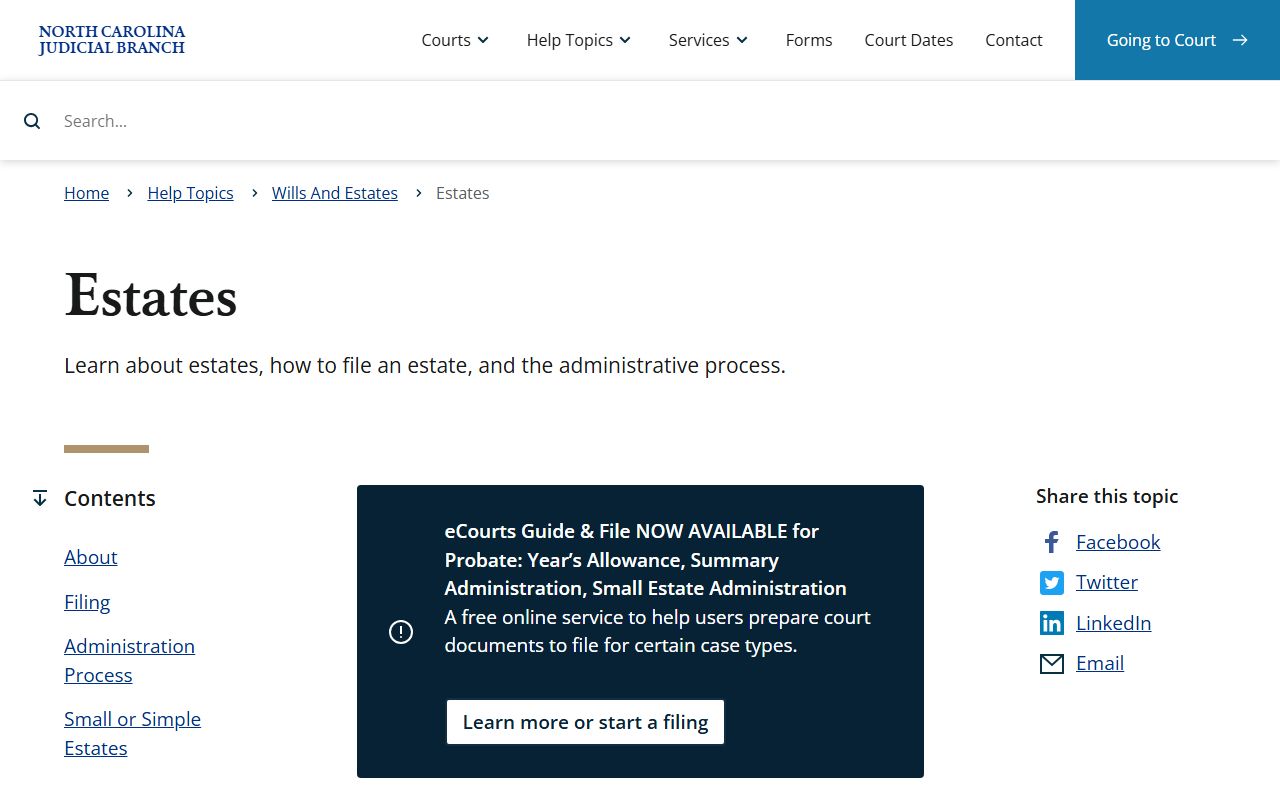
The estates source confirms that estate administration is handled through the courts, primarily in the office of the appropriate clerk of superior court.
Probate assets may include vehicles, bank accounts, stocks, bonds, furniture, and jewelry. Non-probate assets may include survivorship property, named-beneficiary property, life insurance, retirement accounts, joint bank accounts, and annuities. Land and houses generally are not administered through the probate estate unless the will says so or a sale is needed to pay estate debts.
Lincoln County Probate Terms
Probate records use short legal terms that have specific meanings. The terms below are defined in plain language for estate-file reading and should not be treated as legal advice about which procedure fits a specific estate.
- Testator
- A person who made a will.
- Executor
- A person named in a will to carry out estate duties after court authority is issued.
- Administrator
- A person appointed when there is no qualifying executor or no will.
- Intestate
- Dying without a valid will.
- Letters testamentary
- Court-issued authority for an executor to act for the estate.
- Caveat
- A challenge to the validity of a will.
- Guardianship
- A court-supervised arrangement for a person or estate when legal authority is needed.
- Conservatorship
- A term used in some states for financial guardianship; North Carolina probate research here centers on guardianship-related estate proceedings.
Search Lincoln County Estate Records
Estate searches have four documented channels. Portal Smart Search may show public estate case information where available. The clerk's public terminal can be used for civil, special proceeding, and estate case information at the courthouse. The clerk counter is the better path for paper estate files, probate questions, copies, and older records. Guide & File is available statewide for Probate: Year's Allowance, Summary Administration, and Small Estate Administration.
- Search the NC eCourts Portal with Lincoln County selected when public estate case information may be online.
- Use the clerk public terminal at the courthouse for public estate and special proceeding information that is available in person.
- Ask the clerk counter for paper estate files, older records, copy options, and probate filing questions.
- Use Guide & File for eligible probate workflows such as Year's Allowance, Summary Administration, and Small Estate Administration.
- Do not use Lincoln County NextRequest for court documents; probate court documents use the clerk path.
The NC Courts court officials page describes clerk duties, including probate responsibilities.
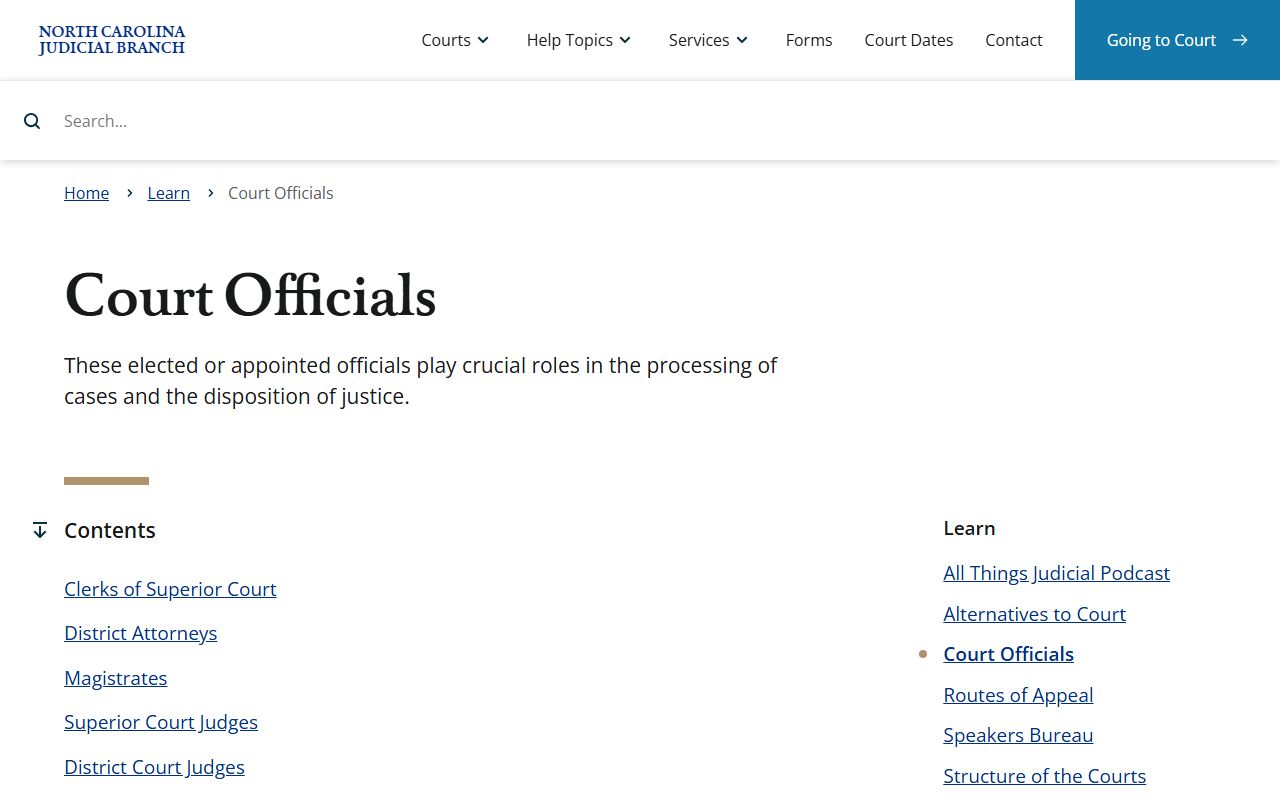
The clerk-duties source supports the local rule that probate belongs with the Clerk of Superior Court rather than a standalone probate office.
Lincoln County Probate Contact
The probate contact is the Lincoln County Clerk of Superior Court at the Lincoln County Courthouse. The research identifies Fred Hatley as Clerk of Court on the county elected-officials page, with a term expiring in December 2026. The North Carolina Judicial Branch contact directory confirms the Clerk of Superior Court phone as (704) 742-7800.
Lincoln County Clerk of Superior Court
Lincoln County Courthouse
120 Justice Drive
Lincolnton, NC 28092
(704) 742-7800
Monday-Friday, 8:30 a.m.-5:00 p.m.
Use this office for Lincoln County probate records, estate filings, paper files, public terminal access, copies, and probate filing questions. If a case involves a will caveat, the dispute may move before a Superior Court judge rather than remain entirely before the clerk.
Lincoln County Estate Fees
Estate fees come from the 2026 current court-cost chart. Some probate fees are flat. Others depend on the gross estate. The gross-estate fee is $0.40 per $100 of gross estate, with a $15 minimum and a cumulative maximum of $6,000. The fee table should be checked against the current chart before filing because court costs can change.
The current court costs publication is the source for the estate fee chart.
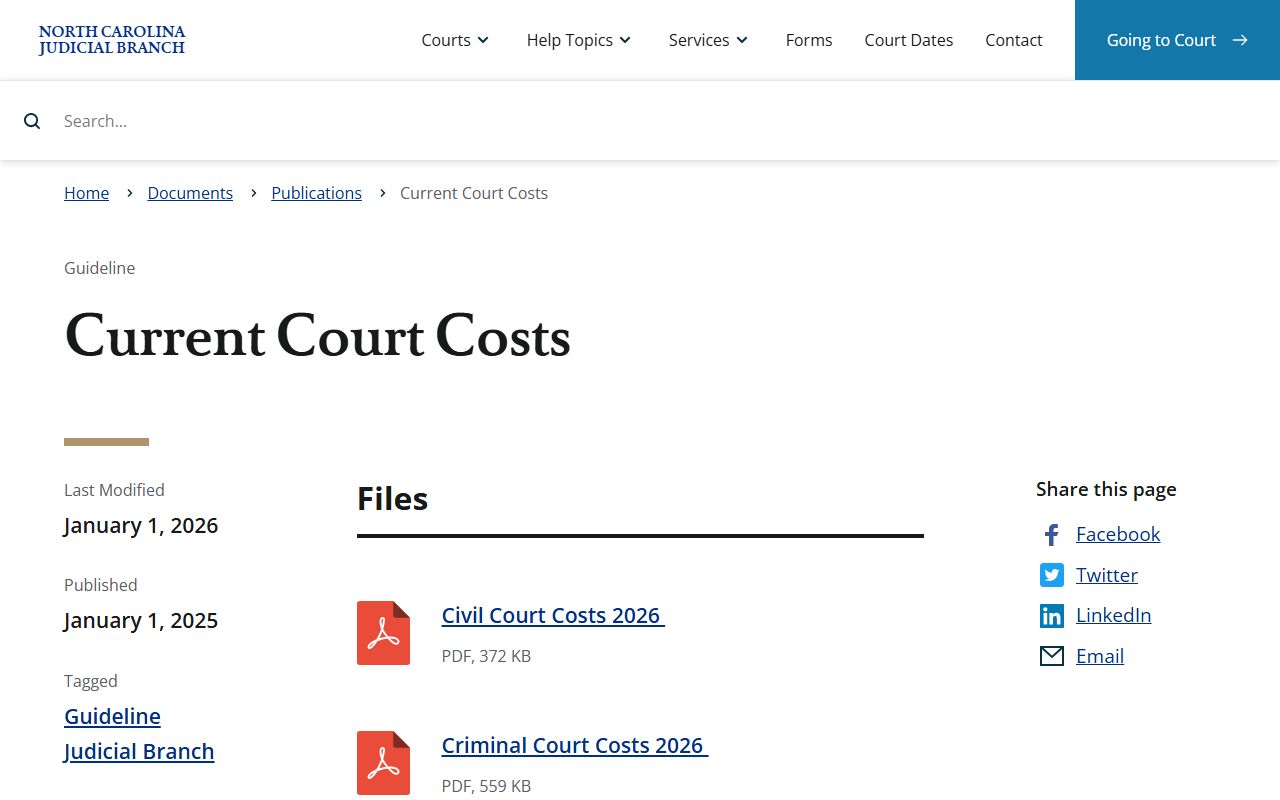
The court-cost source is the correct place to verify filing fees before opening an estate or special proceeding.
| Probate / Estate Item | Fee |
|---|---|
| New administrations and estate proceedings | $120 plus gross-estate percentage. |
| Gross estate fee | $0.40 per $100 of gross estate; $15 minimum; cumulative maximum $6,000. |
| Caveat for decedents dying on or after Jan. 1, 2012 | $200. |
| Application for administration by clerk | $20. |
| Probate of will without qualification | $30 total. |
| Collection of personal property by affidavit | $120 plus gross-estate fee. |
| Sheriff service fee | $30. |
| Filing/indexing will without probate | $1 first page, $0.25 each additional page. |
| Hearing on petition for year's allowance | $20. |
What Lincoln County Probate Records Show
Lincoln County probate records may show the estate or decedent name, case number, filing date, estate type, personal representative, executor or administrator, devisees in testacy where indexed under G.S. 7A-109, wills, codicils, letters issued, inventories, accountings, creditor notices, orders, hearings, financial or gross estate fee information, and caveat filings when a will is challenged.
| Field | What It Shows |
|---|---|
| Estate or decedent name | The person or estate tied to the probate file. |
| Case number and filing date | The court identifier and opening date. |
| Estate type | Full administration, small estate, summary administration, year's allowance, collection by affidavit, or related matter. |
| Personal representative | Executor, administrator, or other person granted authority. |
| Wills and codicils | Will documents and amendments where filed and public. |
| Inventories and accountings | Estate property and reporting filed during administration. |
| Orders and hearings | Court or clerk actions in the estate case. |
Lincoln County Estate Process
Estate administration gives a personal representative authority to inventory assets, notify creditors, pay valid debts and costs, and distribute remaining property. The exact procedure depends on the estate, the will, the value and type of property, and whether disputes exist. The research did not locate a Lincoln County-specific estate packet beyond statewide NC Courts guidance and cost charts.
- Locate the will, if any. NC Courts notes wills may be kept in safes, safe-deposit boxes, attorney files, or deposited for safekeeping with a clerk.
- Contact the Lincoln County Clerk of Superior Court if the decedent lived in Lincoln County or owned property requiring a Lincoln estate filing.
- Determine whether the matter qualifies for small estate, summary administration, year's allowance, collection by affidavit, full administration, or another procedure.
- File required forms and pay the applicable estate fee.
- Obtain authority from the clerk if a personal representative is appointed.
- Inventory assets, give required notices, pay valid debts and costs, file accountings, and distribute remaining property.
- If a caveat challenges the will, expect possible Superior Court involvement.
Restricted Lincoln County Probate Records
Not every file touching estates, family status, or personal affairs is public. Adoption records are confidential and sealed except as provided by law. Juvenile court records are withheld from public inspection except for listed parties or by court order. Some guardianship-related records may include sensitive medical, financial, or minor information, and public access may be narrowed by statute or court order.
The adoption record confidentiality statute documents why adoption records are not ordinary public probate records.
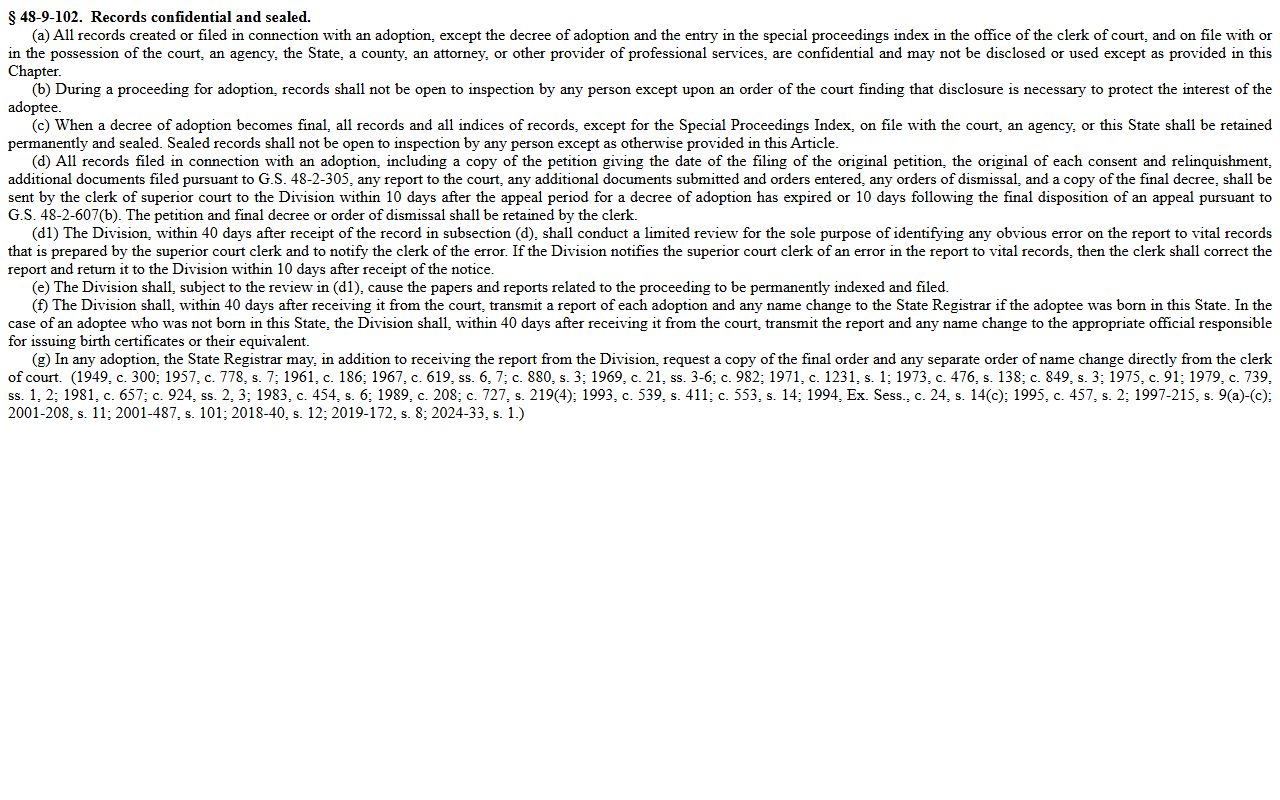
The adoption statute image supports a clear access limit for records sometimes confused with probate or clerk records.
The juvenile court record restriction statute is another important boundary on public inspection.
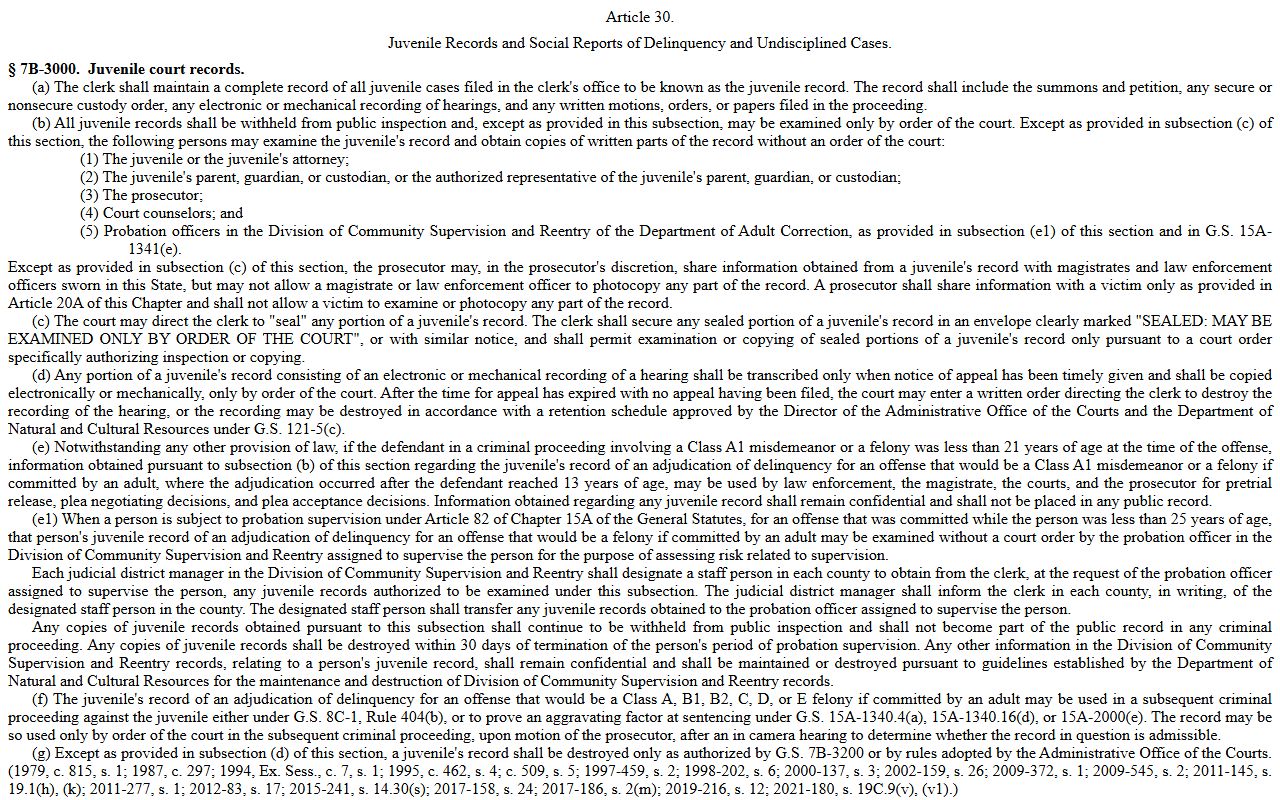
The juvenile statute image reinforces that public estate searches should not promise access to restricted minor or juvenile files.
Note: Public estate records should be searched through the clerk and Portal channels, but restricted filings may require a court order or listed-party access.