
Lincoln County Arrest Records and Charges
Arrest records are law-enforcement records tied to taking a person into custody. In Lincoln County, public arrest-related channels include the Lincoln County Sheriff's Office site, P2C arrests, P2C daily bulletin, P2C event search, and inmate roster tools. Those channels may show a recent arrest, name, date, booking agency, primary charge, or event entry. They do not prove guilt. The P2C arrests page includes the important concept that listed people have been arrested but not convicted.
Court charge records are different. They begin when an accusation is filed in the court system through a citation, warrant, criminal summons, magistrate order, indictment, information, or similar charging document. Once filed, the charge can be tracked through the North Carolina eCourts Portal, the clerk's office, and later case events. The full criminal case file and sentence belong on the Lincoln County criminal court records page, while booking and custody details belong with jail and inmate records.
The Lincoln County Sheriff's P2C arrests page is a law-enforcement source for recent arrest information.
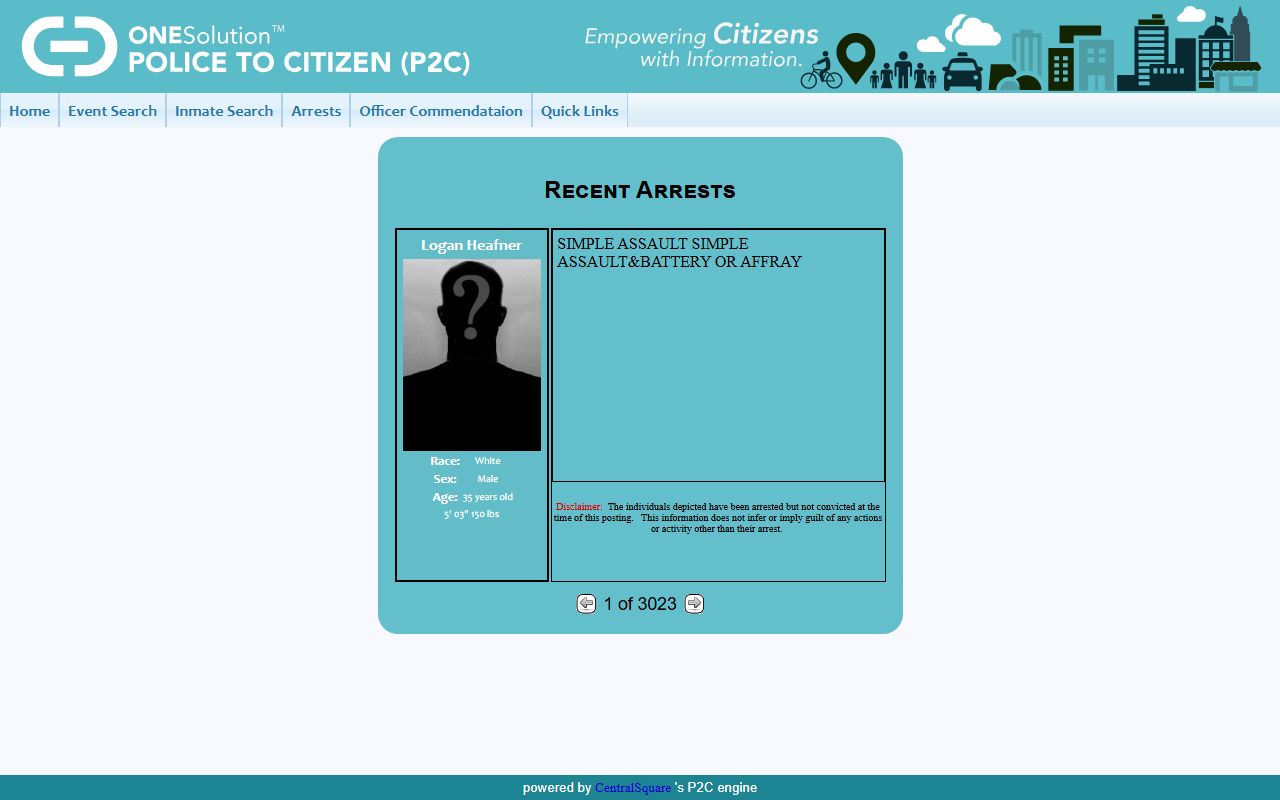
That source helps identify recent arrest activity, but it should be checked against court records before treating a charge as resolved.
Find Lincoln County Arrest Records
The sheriff-side search path and the court-side search path answer different questions. For arrest and custody data, use the Lincoln County Sheriff's Office, P2C arrests, P2C event search, or inmate roster channels. For charges after arrest, use the NC eCourts Portal, the public terminal at the Lincoln County Clerk of Superior Court, or a clerk paper-file request. For custody notification, use VINE. For county-government records that are not court case files, Lincoln County also uses NextRequest.
- Check P2C arrests or event search when the question is whether a recent law-enforcement event or arrest appears.
- Use the jail roster or inmate search when the question is current custody or booking status.
- Search Portal Smart Search by defendant name or case number when the question is what charge entered court.
- Open the case summary to read each charge, charge status, disposition, and hearing history that is public.
- Ask the Clerk of Superior Court for copies, certified records, paper files, or older records not visible online.
The P2C Event Search covers arrests, accident reports, and other events by period, name, or address. It is useful context, but it is not the same as an active-warrant search and it is not the official criminal judgment. Charges after arrest must be read in the court file for the current status and outcome.
The Lincoln County Sheriff's P2C event search is one way to review sheriff event activity linked to names, dates, or addresses.
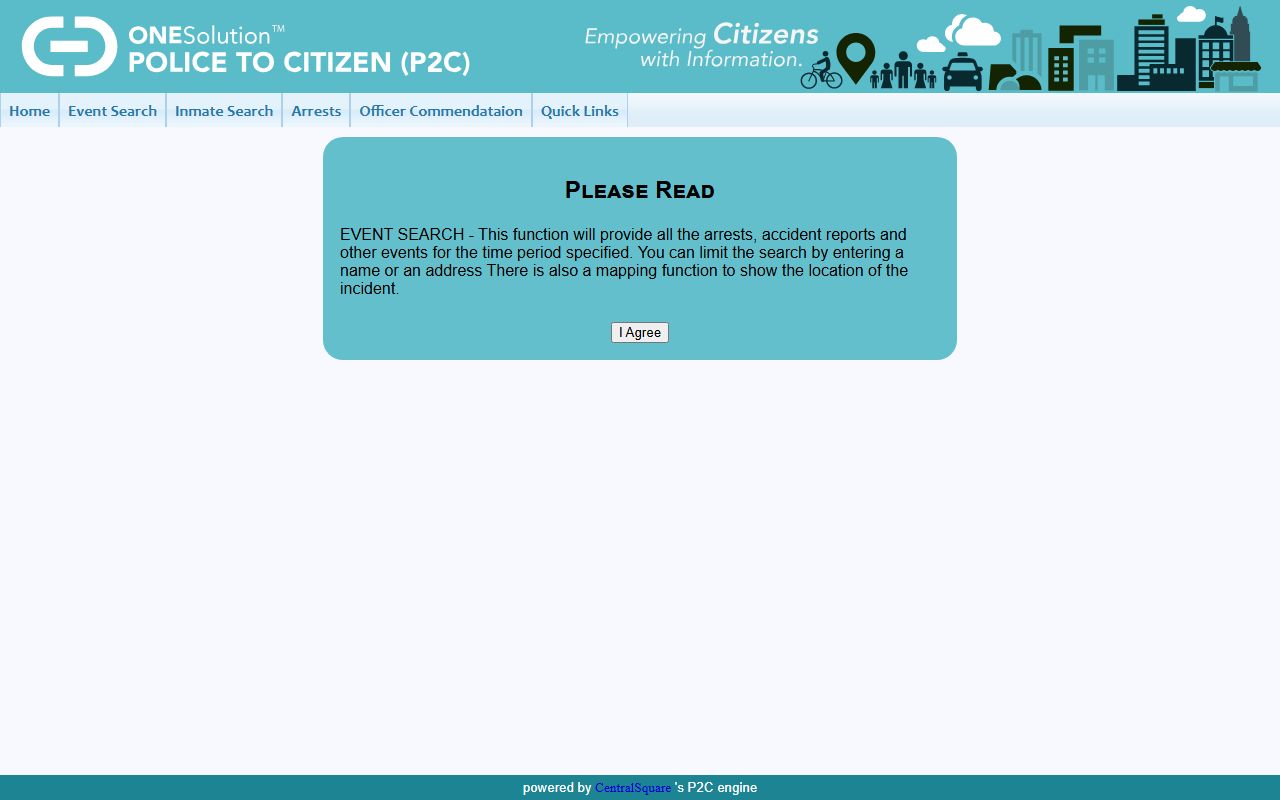
Because event search is broader than court charging data, match any event entry to a court case before relying on a charge status.
Charges After Arrest Documents
After an arrest, the formal court accusation may come through several document types. North Carolina criminal records may include warrants, citations, criminal summonses, indictments, informations, magistrate orders, or other charging instruments. The document identifies the defendant, alleged offense, statute or offense code, offense date, court, case number, and later disposition if the charge resolves. One arrest can lead to several counts, and each count can change as the case moves.
| Document | Who or what creates it | How it appears in Lincoln County records |
|---|---|---|
| Complaint or Magistrate Process | Law enforcement, complainant, or magistrate process based on the accusation and probable cause. | May lead to a warrant, summons, initial appearance, release conditions, and a District Court record. |
| Information | Prosecutor-filed accusation where allowed by criminal procedure. | Can define the charge the State pursues after review by the District Attorney. |
| Indictment | Grand jury charging document, most often linked to felony prosecution. | Often moves a felony matter into Superior Court and appears with count, offense, and statute details. |
Mike Miller is identified as District Attorney for Prosecutorial District 39, covering Cleveland and Lincoln counties. The District Attorney represents the State in criminal prosecutions, but that office is not the ordinary custodian for court-file copies. The DA may affect what charges are filed, amended, reduced, dismissed, or taken to trial. Public copies still route through Portal or the Clerk of Superior Court.
Lincoln County Charge Status
Charge status is the key field after the initial arrest record. A person may be arrested on one suspected offense, booked with a primary charge, and later face amended, reduced, dismissed, or added charges in court. A charge can remain pending for a time, be resolved by plea, be dismissed by the prosecutor, or end in a verdict. Always read each count separately because a case can have mixed outcomes.
| Status | What it means in a court-charge record |
|---|---|
| Pending | The charge is still open or awaiting a court event, plea, hearing, dismissal, or trial result. |
| Amended or Reduced | The original accusation changed, often by prosecutor action, plea terms, or court order. |
| Dismissed | The charge did not result in conviction on that count, though other counts in the same case may differ. |
| Nolle Prosequi | The prosecutor declines to proceed on the charge, subject to the actual entry and case context. |
| Disposed | The court has entered an outcome, which may include conviction, dismissal, plea, or other final action. |
Portal case summaries may also show hearings, dispositions, financial entries, and documents if public. If a charge status is unclear, the clerk's public terminal or paper-file review may show more context than a brief online result.
Note: A P2C primary charge is not a final court disposition, and later prosecutor or court action may change it.
Lincoln County Charge Record Fields
The same person can appear in several systems with different field sets. P2C roster data may include name, race, sex, age, primary charge, arrest date, and booking agency. Portal charge records may include case number, filing details, court, parties, offense, statute, charge class, count number, offense date, hearings, events, disposition, and financial entries. That is why a charge search should use both the sheriff channel and court channel when the goal is accuracy.
| Field | Where it may appear | Why it matters |
|---|---|---|
| Name | P2C, inmate roster, Portal, clerk terminal. | Identifies the person, but common names need date, case, or agency checks. |
| Primary Charge | P2C roster or arrest data. | Shows a booking-facing label, not the final court outcome. |
| Case Number | Portal or clerk records. | Connects the charge to hearings, filings, disposition, and sentence data. |
| Charge Code or Statute | Portal, charging documents, court file. | Identifies the legal offense and severity level. |
| Disposition | Portal, judgment, clerk file. | Shows the court outcome for each count. |
| Booking Agency | P2C roster. | Identifies the agency tied to arrest or custody intake. |
Charges and Convictions Compared
Arrest records and court charges are often read too broadly. A charge is an accusation. A conviction is a court judgment of guilt after a plea or trial result. The distinction matters because P2C, jail rosters, and event logs can show a person close to the start of the process, while the court file is where dismissal, reduction, plea, trial result, sentencing, or appeal entries appear.
| Point | Charge | Conviction |
|---|---|---|
| Timing | Filed after arrest, citation, summons, or prosecutor review. | Entered after a guilty plea, verdict, or judgment. |
| Meaning | An allegation that must still be resolved. | A finding of guilt on a specific count. |
| Possible change | May be amended, reduced, dismissed, or superseded. | May lead to sentence, probation, costs, appeal, or later relief. |
| Best source | Portal, clerk file, charging document, and charge status. | Judgment, disposition entry, sentence, and final court record. |
Statewide Custody and Charge Checks
Lincoln County arrest data can overlap with state systems, but those systems answer separate questions. The NC DAC offender search is for sentenced state offenders, not the Lincoln County jail roster. VINE provides custody notifications and release or transfer alerts. Portal shows public court case information. None of those tools should be treated as a single statewide arrest-record database for every law-enforcement event.
VINE is the official notification source identified in the research for custody alerts.
VINE can help with custody awareness, while Portal and clerk records remain the better sources for filed charges and dispositions.
Restricted Lincoln County Charge Records
Some arrest-related or charge-related records are restricted. Juvenile court records are withheld from public inspection except for listed parties or by court order under North Carolina juvenile statutes. Expunction files and expunged court records retained by clerks are confidential under N.C. Gen. Stat. 15A-151. Law-enforcement investigation records may also be limited under N.C. Gen. Stat. 132-1.4.
| Point | Sealed or Restricted | Expunged |
|---|---|---|
| Public Search | Blocked or partly redacted because of case type, order, or statute. | Removed from ordinary public access after a qualifying order. |
| Examples | Juvenile matters, protected victim data, investigative material, confidential addresses. | Eligible arrests, dismissals, or convictions after court-granted relief. |
| How to confirm | Ask the Clerk of Superior Court or the custodian named by law. | Review the order or get legal advice about the expunction effect. |
The Lincoln County Sheriff's Office, magistrates, Portal, and Clerk of Superior Court each hold different parts of the arrest-to-charge path. No single screen should be used as a complete criminal history. For a certified single-county criminal background check, the NC Courts research points to form AOC-CR-314 through the Clerk of Superior Court and a $25 fee.